
Everything You Need to Know About Baskets
Baskets are having a moment, and honestly they earned it.
They're the rare thing that's genuinely useful, genuinely beautiful, and still genuinely affordable. A hundred-year-old handwoven basket often costs less than something mass-produced to look like one. That math doesn't work out in your favor very often.
Here's how to buy them, keep them, and use them.

Know What You're Looking At
You don't need to memorize regional weaving traditions. Two categories cover most of what you'll find:
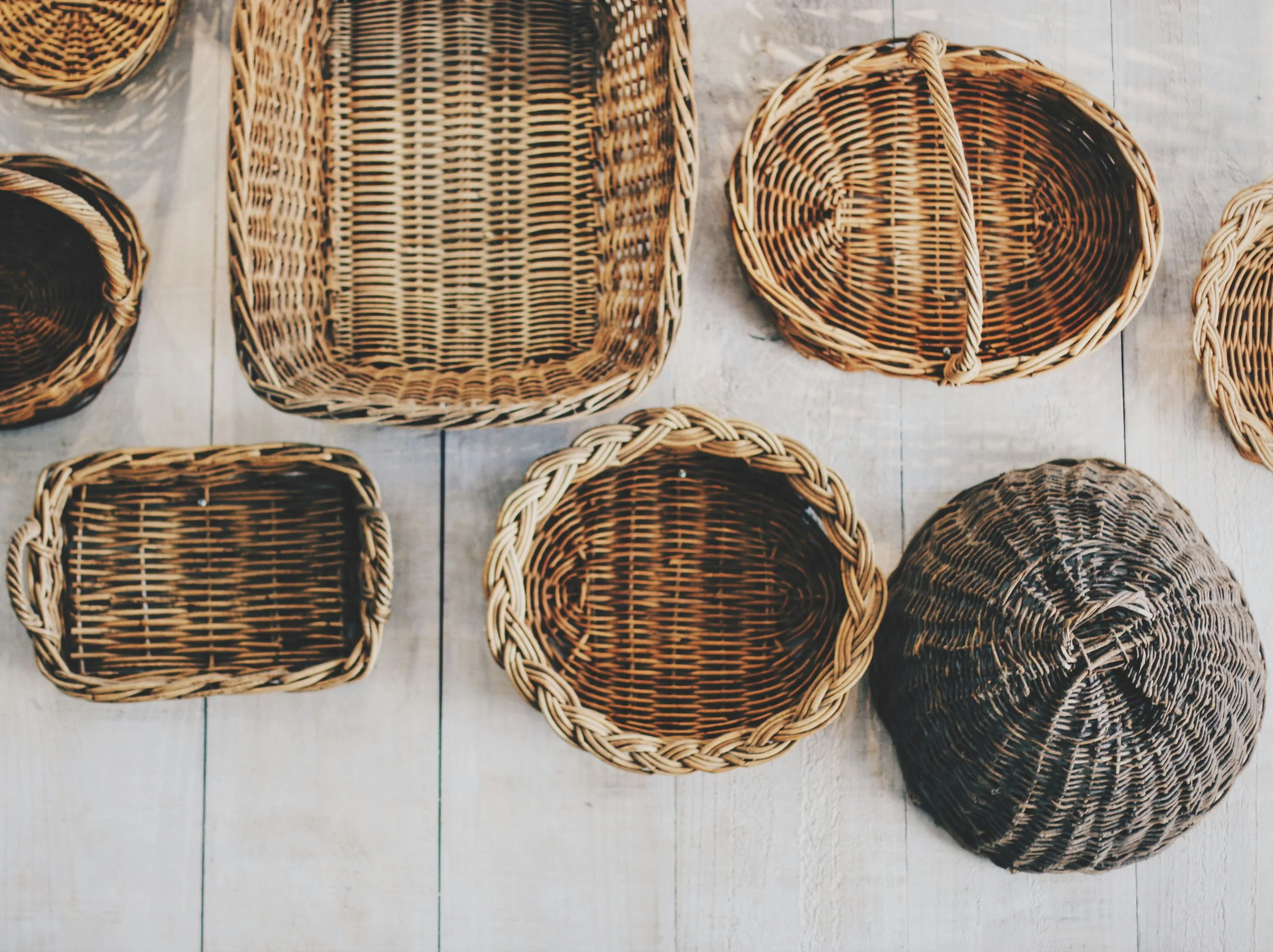
Splint baskets are woven from thin strips of wood, usually oak or ash. Sturdy, structural, the classic farmhouse shape.
Coiled baskets are made from bundles of grass or straw stitched in a spiral. Softer edges, warmer color, more texture.
Everything else is a variation. Egg baskets with the two round lobes, market baskets with a swing handle, cheese baskets with that open honeycomb weave. Learn the shapes you like and let the rest come with time.
Spotting the Good Ones
Three things separate a real find from a reproduction.
Uneven splint. Handmade strips wander a little in width and thickness. Machine-cut splint is identical all the way around. Run your thumb along it.
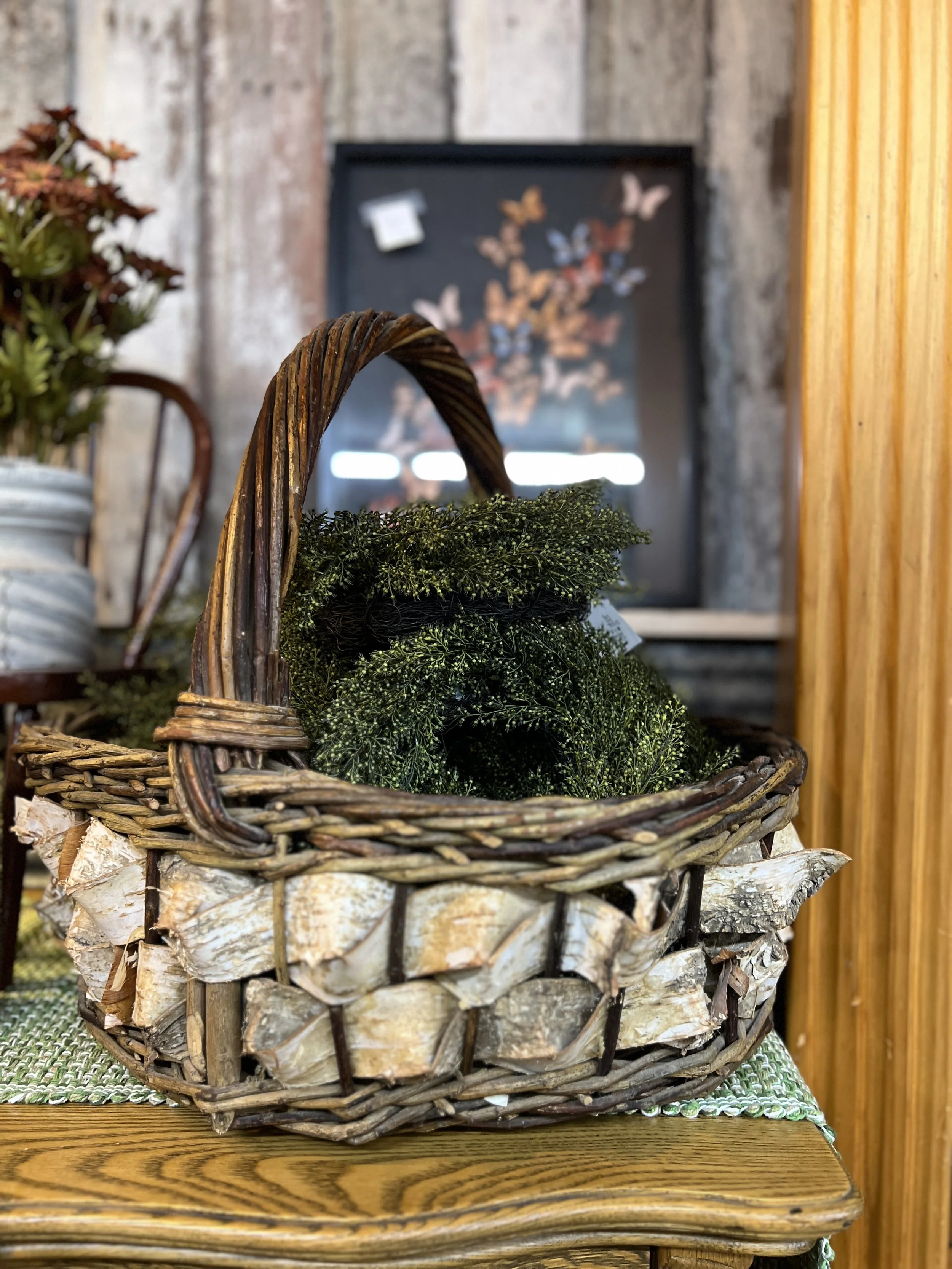
Patina that makes sense. Old baskets darken where hands touched them. The handle should be darkest, then the rim, with the inside lighter than the outside. If the whole thing is one even shade, someone stained it.
No hardware. Older baskets are lashed, notched, and pegged together. Staples, wire, and visible glue usually mean recent.
Then pick it up. New baskets feel light and stiff. Old ones feel settled, a little softer, slightly heavier than they look. You'll recognize it after handling a few.
Damage isn't automatically a dealbreaker. A worn base or an old repair means it got used, which is the point. What to skip: broken ribs, a failing rim, mold, or anything that's been scrubbed back to raw pale fiber.
Keeping Them Alive
Don't soak them. This advice is everywhere online and it's wrong. Water swells the fibers, loosens the weave, and grows mold in places you can't reach.
Skip the oil. Furniture wants oil. Baskets don't. It attracts dust and darkens unevenly, and you can't undo it.
Watch the heat. Dry winter air makes splint brittle and crackly. Keep baskets away from radiators, vents, and direct sun.
Dust with a soft brush. That's the whole cleaning routine.
Don't hang heavy things by the handle. Handles were built for carrying, not for holding weight forever. Let the base do the work.
Actually Using Them
Don't overfill. A basket stuffed to the rim is just a container. Leave room and you get to see the shape you paid for.
Go up high. Above the cabinets, on top of a wardrobe, anywhere with awkward empty volume. Baskets fill space without making a room feel heavy.
Hang a few together. Three on a wall, varied in size, spaced close enough to feel related. Instant texture, zero commitment.
Contrast is everything. A rough woven basket looks best against something smooth. Clean plaster, a modern kitchen, a simple table. Rustic against rustic just turns into noise.
One big one beats five small ones. A single large basket by a chair or a fireplace does more work than a scattered collection.
Why They Work
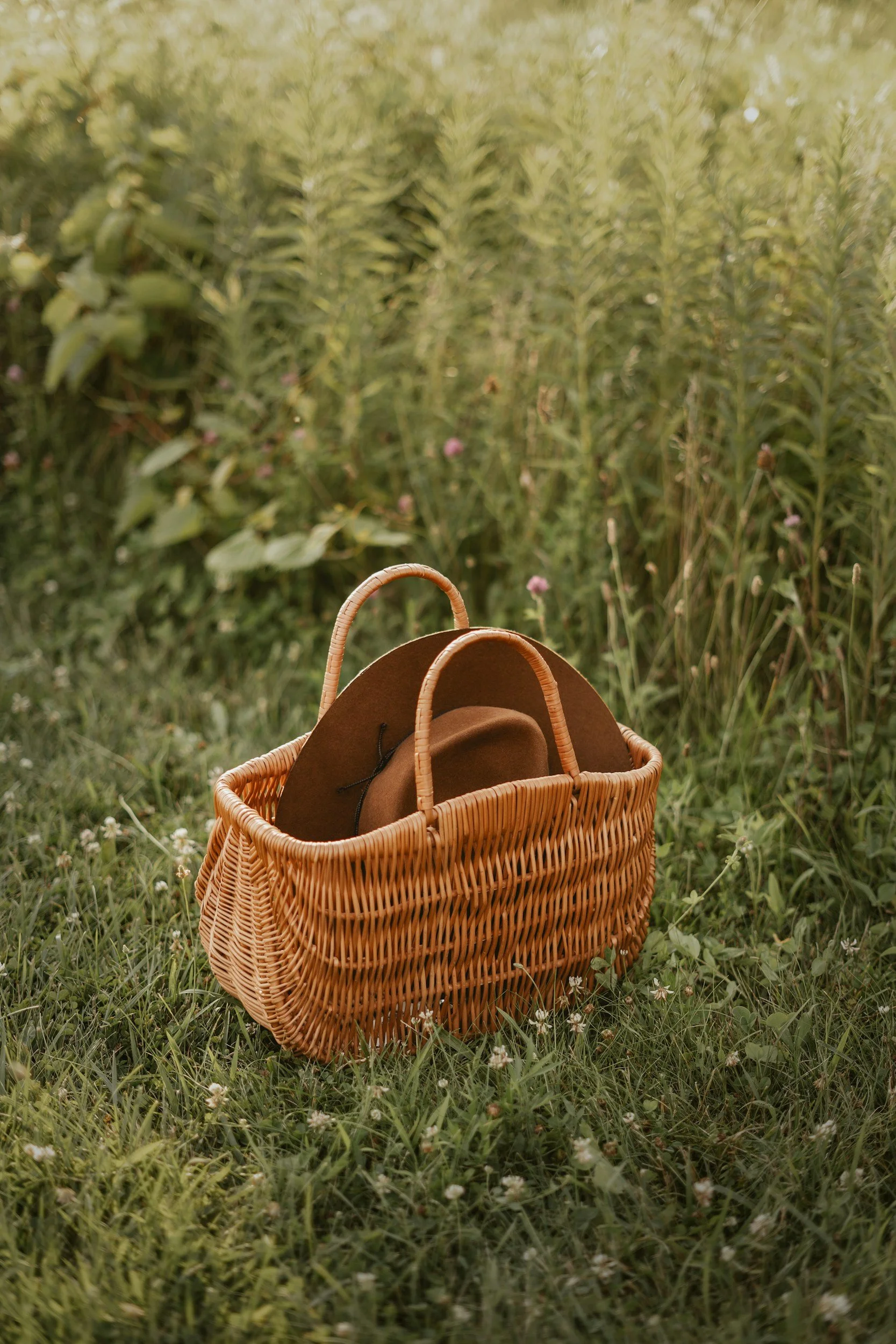
Rooms need texture, and baskets are one of the easiest ways to get it. Woven fiber breaks up flat surfaces, softens hard corners, and warms up a space that feels a little too finished. It's why they turn up in every European countryside interior you've saved to a board somewhere. They do something that paint and furniture can't quite manage on their own.
And they're forgiving. There's no wrong way to use one. Fill it, empty it, hang it, move it to a different room next month when you change your mind.
Come see what our vendors have turned up.
